
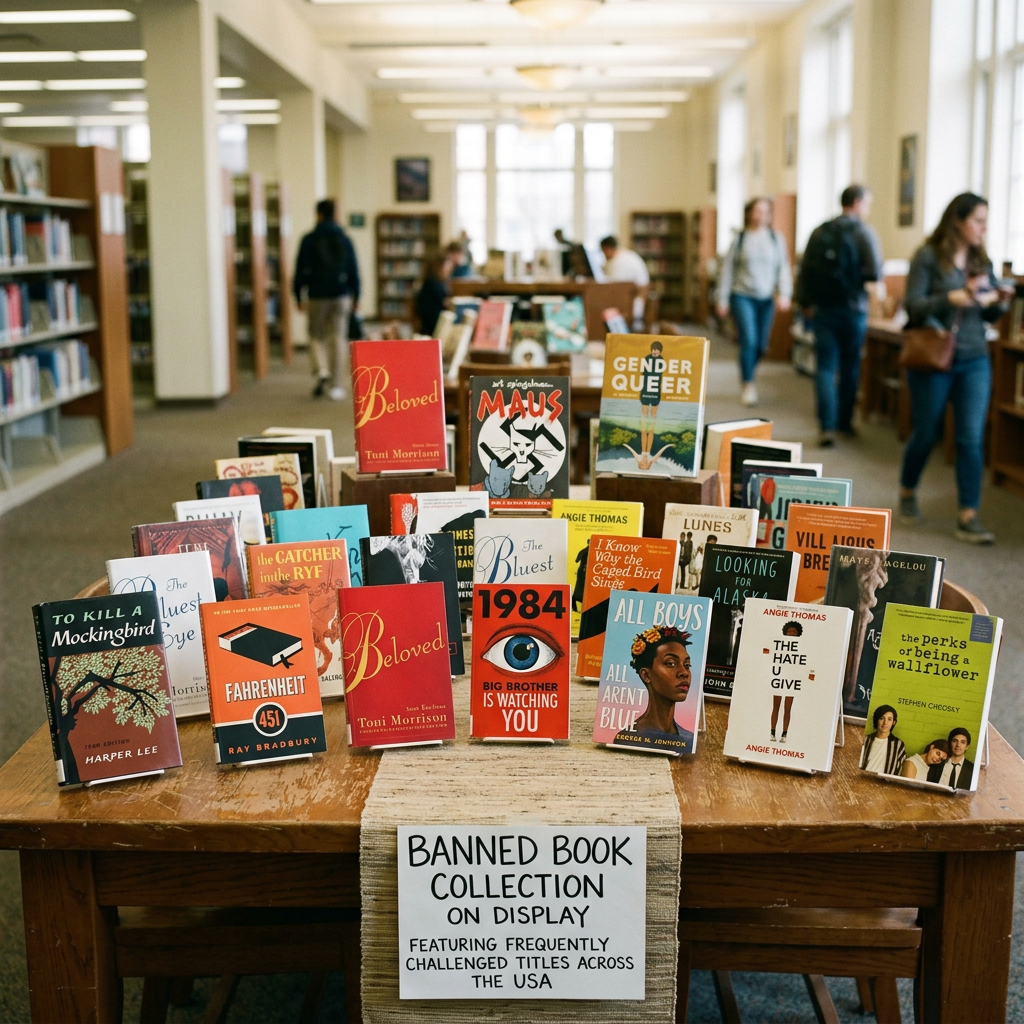
Teaching can be difficult when deciding on books to read. What level is the book? What is the theming? Are there topics that might be sensitive to some readers? One has to consider all of these and also must to consider the choices of books that the school library might have.
I have never been one for censorship and gentle history. I believe that we need to be exposed to both good things that have happened and the bad things that have happened too. I am not saying that we approach this with an all or nothing mindset. There are ways to teach subject matter that can be very difficult to face in a thoughtful but honest manner. The topics of slavery, the Holocaust, wars of any kind, abuse of any kind, family struggles like divorce, and the very difficult topic of suicide all come to mind when I consider painful content. With that in mind, I do not feel that we should just throw some glitter on it and forget the past. I feel that no matter what the subject, it can be discussed in a dignified manner.
My classes are currently reading a play and a novel that both have some of these subjects within them. My sophomores are reading Lorraine Hansberry’s “A Raisin in the Sun.” This follows the struggles of the Younger family in Chicago in the 1950s. It contains the topics of racism, abortion, and finding ones own identity. This does have some hard lessons, but it does end on a positive note. What happens to the Younger family after they move into their house in an all white neighborhood is left to our imaginations. We hope that they continue to grow closer and thrive in their new home. My seniors are reading Judith Guest’s book Ordinary People. This book deals with the loss of a child, suicidal ideations, divorce, and survivor’s guilt. Conrad Jarret is trying to cope with the loss of his brother and his failed suicide attempt. His father tries to be supportive, but his mother does not know how to relate to him. She blames him for the death of his brother who was killed in a boating accident. Conrad was also riding in the boat but survived. We see the deterioration of a family unit. For some students, this is a very real situation. The details may not be the same, but the story may closely resemble things that they may have endured.
I am left with the thought of how best to broach these topics with kids that may not have dealt with their own family trauma. I feel that these serious types of topics can be discussed in a very understanding manner. There is not one person that has not had a traumatic situation of one kind or another. They may not be life altering like some of the situations in the stories we read, but they could be. Taking a caring and open minded approach is the best way, I have found, to talk about rough subject matter. I give them a bit of a word of caution before we begin reading and let them know that if something is too heavy for them, they can step out for a break.
In my eighteen years of teaching, there have been very few times that it has been too overwhelming and a student had to excuse themselves for a bit. I know that this is probably not everyone’s experience. I get that and you as the teacher can handle that in the best way for you and your students. No two classes are ever the same and it is the responsibility of the teacher to know his or her students and what they can or cannot handle. There may be a situation that you encounter that you were not aware of beforehand and that can be dealt with on a case by case basis. Treat your students respectfully and ask the same of them for each other. Everyone is going through stuff that no one else knows about, so it is vital to be kind and compassionate. Even if you cannot relate to their struggle, you can try to understand it.
With all of this being said, I encourage my fellow educators and even parents to have the tough conversations. Ask your children what they are reading. Take time to have a conversation. As the teacher, leave time for questions and discussion. You just never know when a subject may lead to a deep and meaningful lesson. With all of this in mind, I believe that reading difficult material can help us all grow in compassion and empathy for others and their life experiences.
Sorry about the heavy material, but it was on my mind. I wish you all of the best when engaging your students in meaningful conversations. We are on the final push through the school year. Don’t forget to take some time for yourself so that you can be the best version of yourself for your students, your families, and for your own mental health. Have a great rest of the week.
Until next time,
Cat


